
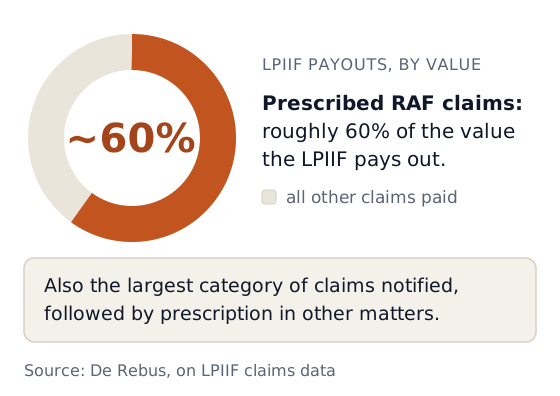
Missed prescription is the single most expensive administrative mistake a South African attorney can make. According to the Legal Practitioners Indemnity Insurance Fund (LPIIF), prescribed Road Accident Fund claims are consistently the largest category of claims notified to it, followed by prescription in other matters, and prescribed RAF claims account for roughly 60% of the value it pays out (De Rebus, "A focus on prescription-related claims").
None of those claims arise because attorneys do not know the law. They arise because a date was never diarised, was diarised on one person's calendar, or was diarised with no warning before the last day. This guide gives the main periods in one place, then sets out how to run a diary that does not let them slip.
This is general information, not legal advice. Prescription turns on facts (when the debt became due, what the creditor knew, whether anything interrupted or delayed it), and every matter needs its own assessment.
The general rule: Prescription Act 68 of 1969
The Prescription Act sets default periods for the extinctive prescription of debts in section 11, "save where an Act of Parliament provides otherwise".
| Debt | Period | Section |
|---|---|---|
| Debt secured by mortgage bond; judgment debt; taxation debt; debt for state royalties and similar charges on minerals | 30 years | s11(a) |
| Debt owed to the State for an advance or loan of money, or from the sale or lease of State land, unless a longer period applies | 15 years | s11(b) |
| Debt arising from a bill of exchange or other negotiable instrument, or a notarial contract, unless a longer period applies | 6 years | s11(c) |
| Any other debt (most contract and delict claims, including professional negligence and personal injury against private parties) | 3 years | s11(d) |
When the clock starts: section 12
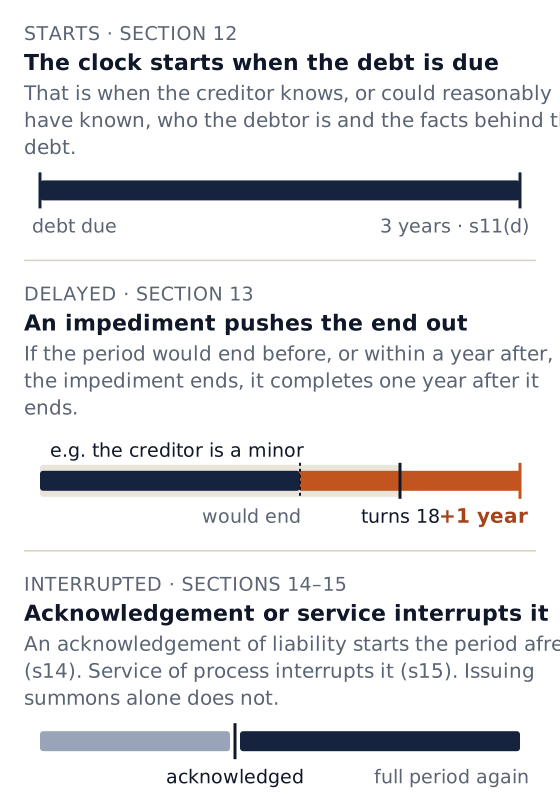
- Prescription starts running when the debt is due (s12(1)).
- A debt is not due until the creditor knows the identity of the debtor and the facts from which the debt arises. The creditor is treated as having that knowledge if they could have acquired it by exercising reasonable care (s12(3)).
- If the debtor wilfully prevents the creditor from learning of the debt, prescription does not start until the creditor knows (s12(2)).
The file note matters here. For every matter with a prescription risk, record why you think the debt became due on a particular date and what the client knew and when.
Delays: section 13
Section 13 does not stop prescription. It delays its completion. If one of the listed impediments exists and the period would otherwise end before, on, or within one year after the day the impediment ceases, the period is only completed one year after the impediment ceases (s13(1)(i)). The impediments include:
Minors are the case that matters most day to day. A three-year delictual claim of a child who turns 18 on 1 March 2027 cannot prescribe before 1 March 2028.
Interruption: sections 14 and 15
- Acknowledgement of liability by the debtor, express or tacit, interrupts prescription and it starts running afresh (s14). Part-payment and a written request for time to pay are common examples. Keep the evidence on the file.
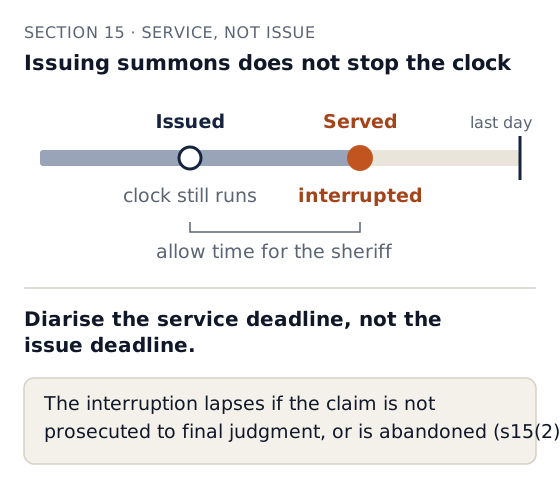
- Judicial interruption: service on the debtor of any process by which the creditor claims payment interrupts prescription (s15(1)). Issuing summons is not enough; it must be served. The interruption lapses if the creditor does not successfully prosecute the claim to final judgment, or abandons it (s15(2)).
The practical rule: diarise the service deadline, not the issue deadline, and allow time for the sheriff.
Statutes that override the default
"Save where an Act of Parliament provides otherwise" does a lot of work. These are the ones most general practices meet.
Road Accident Fund Act 56 of 1996
| Claim | Lodge with the RAF within | Serve summons within | Source |
|---|---|---|---|
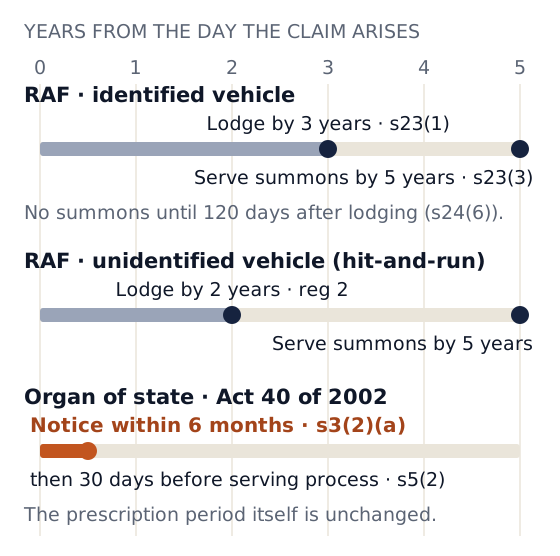
| Identified vehicle (owner or driver known) | 3 years from the date the cause of action arose | 5 years from the date the cause of action arose (if lodged in time) | RAF Act s23(1) and s23(3) |
| Unidentified vehicle (neither owner nor driver established, typically hit-and-run) | 2 years from the date the cause of action arose | 5 years from the date the cause of action arose (if lodged in time) | RAF Regulations, 2008, reg 2 |
Other RAF rules to diarise:
- 120 days. No summons may be served on the Fund before 120 days have passed from the date the claim was lodged (s24(6)). Lodging in month 35 leaves very little room.
- Minors and people under legal disability. For identified-vehicle claims, prescription does not run against a minor, a person detained as a patient under mental health legislation, or a person under curatorship (s23(2)). The regulations tried to apply the two-year unidentified-vehicle limit "irrespective of any legal disability"; that has been successfully challenged in court (De Rebus discussion of regs 2(1)(b) and 2(2)). Check current case law before relying on either position.
- Lodging is not just posting a form. A claim that does not substantially comply with section 24 may not be validly lodged, which means the three-year period was never met. Diarise a check that the RAF has acknowledged the claim.
When the award is paid
When an RAF award is paid, it lands in your trust account and must be accounted to the client under Rule 54.12 before fees are transferred. Our LPC Rule 54 trust accounting guide covers that side. If you act on contingency, keep the signed agreement on the matter file alongside the prescription dates.
Claims against organs of state: Act 40 of 2002
The Institution of Legal Proceedings against Certain Organs of State Act 40 of 2002 does not change the prescription period, but adds a precondition that catches people out:
- Written notice of intended legal proceedings must be served on the organ of state within six months from the date the debt became due (s3(2)(a)).
- No process may be served until 30 days after the notice was served, unless the organ of state repudiates liability in writing sooner (s5(2)).
- A court may condone a late notice on application (s3(4)), but condonation costs time and money and is not guaranteed.
This covers national and provincial departments, municipalities and many public entities. A claim against a municipality for a pothole injury, or against a provincial health department for medical negligence, needs a six-month diary entry on day one.
Other time limits often confused with prescription
These are not prescription periods, but they belong in the same diary.
| Matter | Time limit | Source |
|---|---|---|
| Refer an unfair dismissal dispute to the CCMA or a bargaining council | 30 days from dismissal (or the decision to uphold it) | Labour Relations Act 66 of 1995, s191(1)(b)(i) |
| Refer an unfair labour practice dispute | 90 days from the act or omission (or from when the employee became aware of it) | LRA s191(1)(b)(ii) |
| Court rules: filing a plea, notices of intention to defend, appeals | Set by the Uniform Rules or Magistrates' Courts Rules for each step | Rules of court |
How to run a prescription diary that works
The law above fits on two pages. The system around it is what protects the firm. Here is the standard we would hold any practice to.
1. Capture the date on intake, not later
Every new matter gets a prescription assessment before the file is opened: which period applies, the date the debt became due (with reasons), any section 13 delay, and whether Act 40 notice applies. If the attorney cannot yet say, diarise the earliest plausible date and refine it.
2. Record the basis, not only the date
A diary entry that says "Prescribes 14/03/2027" is fragile. One that says "Identified RAF claim; accident 14/03/2024; lodge by 13/03/2027 (s23(1)); serve summons by 13/03/2029 (s23(3))" can be checked by someone else.
The date only
“Prescribes 14/03/2027”
- No claim type or trigger date
- No section, so nobody else can check it
The date and its basis
- Identified RAF claim
- Accident 14/03/2024
- Lodge by 13/03/2027 (s23(1))
- Serve summons by 13/03/2029 (s23(3))
Note that attorneys commonly count the last day conservatively; when in doubt, act a day early.
3. Warn early and repeatedly
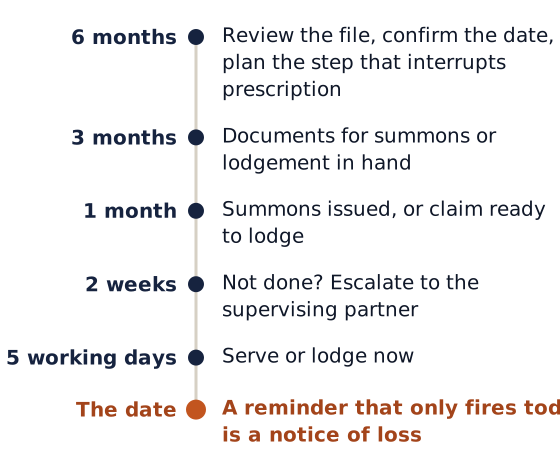
A single reminder on the last day is a notification of a loss. Use a ladder:
4. Assign to a person, and to a second person
Diary entries belong to the attorney carrying the matter, with the supervising partner copied on the last two warnings. When an attorney leaves, their prescription entries must be reassigned before their last day. An audit of "open matters assigned to people who no longer work here" should be a monthly report, not a crisis.
5. Close the loop
When prescription is interrupted (summons served, acknowledgement received, claim lodged and acknowledged), record the event and the new dates. A new period may start running (s14), and the RAF five-year date still stands after lodgement.
6. Use a backup
The LPIIF runs a free Prescription Alert backup diary where firms can register time-barred matters and receive reminders (LPIIF prescription risk resources). It should not be your only system, but it is a sensible second net for RAF matters.
A quick self-audit
- Can you produce, today, a list of every open matter with its prescription date, sorted by date?
- Does every open litigation, RAF and claims matter have a prescription entry?
- Is each entry assigned to someone who still works at the firm?
- Does the diary warn at least four times before the date?
- Is there a record of why each date was chosen?
- Are Act 40 notice dates diarised separately from the prescription date?
If any answer is no, fix that before anything else in this article.
Prescription dates in Caseo
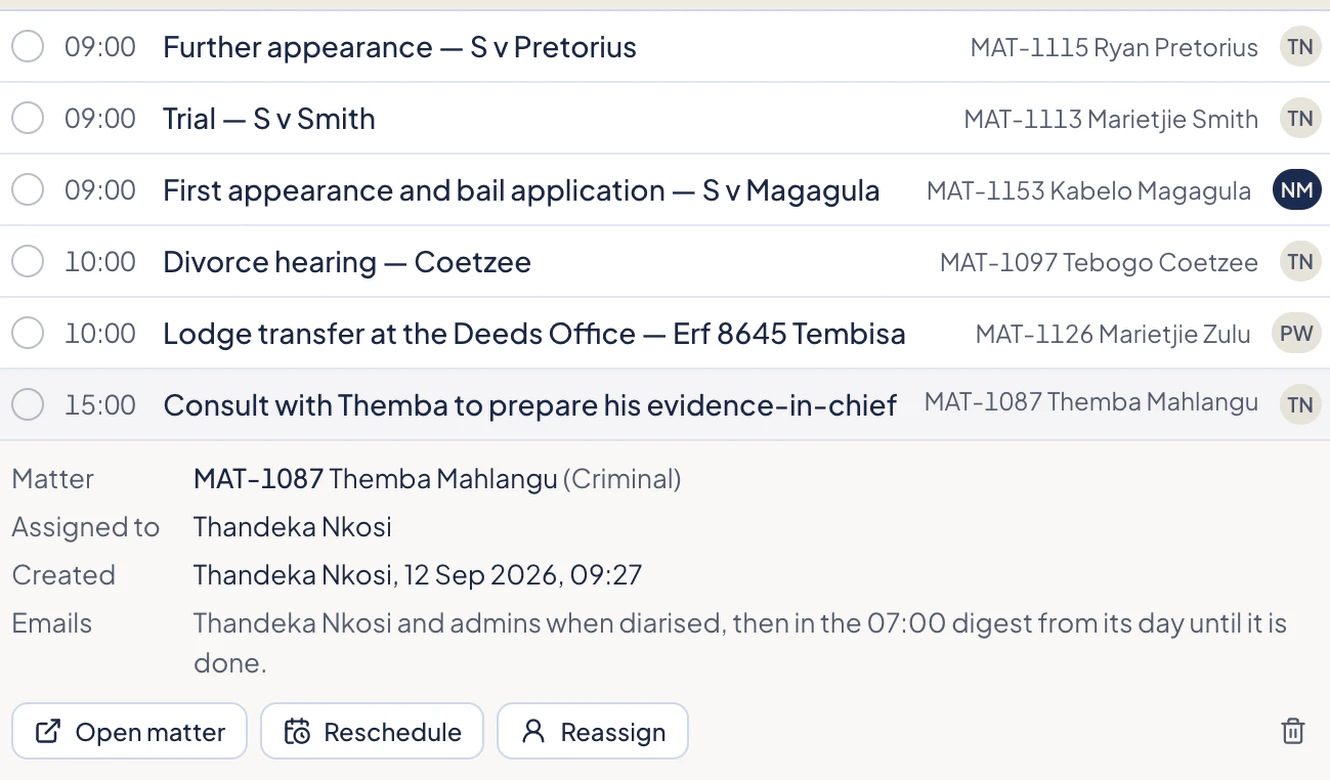
In Caseo, each matter records the cause-of-action (or accident) date and the prescription date. Caseo suggests a three-year date, which the attorney confirms or corrects, and once it is confirmed, diary reminders are created 6, 3 and 1 month before it, assigned by default to the attorney on the matter. Diary entries go to the assignee by email, then into a 07:00 digest every day until they are marked done.
 1
2
3
1
2
3
- Every entry has an assignee. Prescription reminders go to the attorney on the matter by default.
- An email when it is diarised, then the 07:00 digest every day until it is marked done.
- Reassign moves an entry to someone else. Deactivating a member asks who takes over their open matters and diary.
A "prescription within 90 days" filter lists what is coming up across the firm, the phone app's Today screen shows the same 90-day prescription watch, and a fee earner workload view shows overdue diary entries per person. When a member is deactivated, Caseo asks who takes over their open matters and diary. There is more in how the diary works.
For how the diary sits alongside the rest of the practice, see our guide to choosing legal practice management software. To see it on sample matters, have us call you.